
Monday, 23 May 2016

Tuesday, 29 March 2016
Patagonia Ice Fields Trek 2016

I've just returned from possibly our most exciting and stunningly beautiful treks I have ever been lucky enough to lead, Patagonia has to be one of last true wilderness trekking destinations in the world.
First up a visit to the Perito `Moreno Glacier one of only 3 advancing Glaciers in the Patagonia and the centre piece for the Los Glaciers National Park in Argentina. It's sight to not to be missed. As one team member commented on arrival surely it can't get any better than this, and it's only day 1.
But it can and it did.
Arriving in El Chalten our trekking base and my home for an entire month I was feeling very blessed, we had great weather for both treks around the Fitz Roy Range and the Southern Ice Cap.
Our route was 7 day traverse of the Fitz Roy Range before making our way to Paso Del Viento (windy pass) with panoramic views of the largest Ice Cap outside the Polar Regions.
I could talk about this trek forever and possibly will do, but rather than me bore you, take a moment to read the write up from Rebecca Burn-Callander from the Telegraph.
http://www.telegraph.co.uk/sponsored/business/sme-home/news/12193601/business-charity-challenge.html


For more information on this once in life time adventure and 2017 dates Patagonia Glacier & Ice Fields Trek
Tuesday, 9 February 2016
The Benefits of Trekking
The Benefits of getting out in the Hills
People who go trekking on a regular basis have a better
overall health, are more energetic and suffer from less stress, If you’re
looking to get fit in 2016 or take on a new challenge whether it be the 3 PeaksChallenge or Trekking across Iceland, there’s no better time to dust off those
boots and Get Outside.
#1 Improve your Overall Health and Fitness
Getting out in the hills on a regular basis, you’ll not only
feel great but you’ll enjoy optimum fitness making your days out in the
mountains a lot more fun. Whether you’re a novice or a pro, you can gain so
many benefits being the mountains.
#2 Decrease Risk of Cardiovascular Disease
Recent studies show that walking for an hour a day can cut a
person’s risk of stroke in half. Walking conditions the heart and will help you
live longer.
Head to the hills and help keep your cardiovascular system
healthy!
#3 Be Happy
A day in hills, be it a wet and windy weekend in Snowdonia
walking not only calms you but improves your general well being, being In the
grandeur of nature, away from the pressures of everyday life and technology
works wonders for stress relief.
#4 Prevent Diabetes
Walking in the hills will reduce your risk of diabetes. A
good day out in the hills will work your muscles, which transfers glucose from
your bloodstream for energy.
#5 Increase Your Energy Level
Aerobic activities will provide oxygen to your muscles and
other body tissues. This extra fuel helps boost your muscles and lungs and
increases your alertness, and energy and endurance levels!
#6 Lose Weight
Trekking is one of the best ways to burn calories and lose
the unwanted pounds! In fact, numerous studies have proved that hiking can burn
more than 400 calories per hour
#7 Increase Bone Density
Strong bones are essential to your overall health. Hiking
consistently will decrease your chances of developing osteoporosis and
arthritis. If you have arthritis, studies have shown that two and a half hours
of hiking per week will maintain flexibility in your joints and decrease joint
stiffness.
#8 Expand Your mind and Discover New Places
Hiking is a great excuse for visiting new places, great for
creating excitement, avoiding boredom and opening new synopsis’ in the brain.
Instead of planning an ordinary holiday to Spain, take a hike! Adventure trips
can encompass snow-capped mountains, spectacular canyons, fascinating deserts
and verdant forests, the world is your oyster.
#9 Tones Your Muscles
Since hiking can include steep inclines, it is perfect for
challenging your body and for toning your muscles. With brisk movements and a
steady pace, you can get a full body workout. Remember to stretch before and
after a vigorous hike, so that your hamstrings and quads are toned.
#10 Develop Healthy Habits
Another compelling reason to head for the hills is a
much-improved quality of life. Each time you hike, breathe the outside air,
exert and challenge yourself, you will come
away feeling better than you did. Your body and mind will feel healthier and
your stress level will drop off. Because of this great feeling, you’ll want to
hike again. It may even become addictive!
As you notice improvements in your mind and body, you may
adopt other healthy habits such as eating healthy foods.
Get Outside, Challenge Yourself and head for the hills

Wednesday, 6 January 2016
Laugavegur Trail Iceland
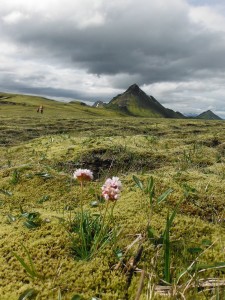
The Iceland Laugavegur Trek is a wild and wonderful trek set amongst the wonderful and impressive landscapes of Iceland.
From the modern city of Reykjavik to the volcanoes, glaciers, waterfalls and steaming lava fields of the interior, Iceland is a country of great contrast. Iceland homes truly unique environments, like nothing you would come across in mainland Europe, which attracts visitors that want to experience magical surroundings and a phenomenal trekking arena.
An excellent choice for those that want to experience this is the undertaking of Laugavegur Trail. A famed trail for its stunning views and range of terrain, those lucky enough to experience this will not be disappointed.
Spanning 49 miles, this is the longest hiking trail in the country. Well travelled, with past hikers and rangers adding special wooden signposts in important positions, the trail can trekked alone or with a special group.
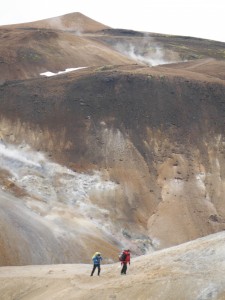 As suggested by the name, Iceland will (depending on climate and season) have icy sections and generally cold temperatures. This means you'll not only have the battle of the long walk up and down trails and mountains, but also have to do so whilst bracing yourself from the cold conditions.
The 6 day Iceland Laugavegur Trek offered by Adventurous Ewe can guide you as a part of the group through some of the most spectacular wilderness that will see you enjoy camping along the way. Discreet vehicle support is also on hand that enables the supply of well-equipped camps and means you can travel lightweight, ensuring maximum satisfaction while working through the environment.
This specific trip allows you to travel through lakes and magnificent lava field, gurgling hot springs and steaming vents, as well as deep canyons, small valleys and the opportunity to whale watch or enjoy the Blue Lagoon.
When you opt to go with a tour group, you is much less risk, more convenience and you get to meet like minded people that will make the experience just that little bit better!
The following video will give you a taste of the Laugavegur Trek in Iceland!
Thursday, 19 November 2015
Sunday, 8 November 2015
Preparing for your Trek
Get the most out of your charity trek
Prepare properly for your trek with our top 10 trekking training tips.
Treks can vary enormously in terms of daily distances, ascent, descent and altitude, but all require specific preparation to ensure you get the maximum from your trekking trip. Our 10 trekking training tips — including advice on trekking equipment, nutrition, hydration and specific trekking training — will help you prepare correctly for your trek so that you're not left nursing blisters and sore legs after the first day.
Start your trekking training early
Even if your planned trekking trip is 12 months away, it’s never too early to get started on your trek conditioning program. Look to build your strength and fitness gradually, giving your body time to adapt to the new demands that you are placing on it. That way you can enjoy your trek training and avoid risking injury by trying to do too much too soon.

Choose the correct footwear for your trek
Good quality and appropriate footwear for your trek and your walking training is essential. A supportive hiking shoe with ankle protection is important but beware of ankle cuffs that are too high as they can irritate the achilles tendon at the base of your calf. Look for an ankle cuff that is scooped away at the back. Make sure that your trekking boots are thoroughly broken in and your feet have bedded in — the time for blisters is now, not during your trek. When purchasing your boots, try to shop in the afternoon when your feet have expanded slightly so that you get the correct size.
Don’t forget your walking socks
With plenty of footwear focus, it’s easy to forget about the best type of socks to wear. The right boots with the wrong socks will ruin your tekking trip so when trying on boots, wear the same socks that you intend to use for your trek. Look for materials such as Coolmax that has sweat wicking properties or consider the new Gore-tex range that wick sweat away but are also waterproof.
Build leg strength with gym work
Leg strength will be key for your trek so in addition to walking training which will strengthen your legs, try and include either gym exercises such as leg presses and weighted squats, or lunges and bodyweight squats.
Build your walking training
Walking training will be the foundation of your training program and it is important to build steadily towards the sorts of distances that you will be doing on your trek. Initially, intersperse training days with rest days but as your fitness improves, look to include some ‘back-to-back’ training days, which will more closely replicate your actual trek.
Train on similar walking terrain
Walking training is essential but it is also important to try and mimic the conditions that you will experience as closely as you can. Try and train on similar terrain to that of your trekking location. For example, for a trek that includes mountain climbing, try some weekend scrambling as part of your training. Also, practice in the same footwear and clothes and experiment with a loaded backpack — it makes a big difference to your speed over the ground.
Practice using your backpack
It’s likely that you’ll be carrying items such as food, drink, spare clothing and possibly more, so your choice of backpack is important. Look for models with adjustable chest and waist straps so that you can position it correctly on your back and also with external compression straps so that the load doesn’t shift. More specialist types have removable bladders for liquid consumption on the go, but remember that water and washing facilities may be limited, so sterilisation may be difficult. Practice using your backpack (loaded) as part of your training so that you are used to the weight and position.
Use walking poles
Walking poles make a big difference to your trek. Lightweight and telescopic, they ease the load on knees and thighs on descents and give you ‘two extra legs’ on steep climbs. They can also be used to help clear vegetation and have numerous uses in a campsite. Definitely one to try.
Hydrate yourself frequently when walking
Whether you are in a hot climate or not, your fluid requirements will increase significantly when trekking. Losses on the breath and from sweating will serve to reduce your blood volume, resulting in your heart having to work much harder. By the time you feel thirsty you will already be dehydrated so try and drink small, frequent quantities of water throughout the day. Carry out the urine test to monitor your hydration: a pale straw color indicates that you are well hydrated, anything darker means that you need to drink more.

Fuel your trekking
Similarly to hydration, your energy requirements will increase whilst you are trekking. Aim to eat small, frequent meals and snacks on the go to maintain energy levels. Depending on the part of the world, your favourite snack-type foods may not be plentiful, but fruit is frequently available which is easy to eat on the move and excellent for an energy boost. During your training, experiment with eating ‘on the go’, so that you get used to the feeling of food in your stomach when you are trekking.
Fit to trek
The fitter you are before you depart, the easier your trek will be. You will have spent a lot of time, effort (and probably money too!) to get to your trekking location, so it makes sense to get the most out of your trip by being in good shape and having suitable kit. By following the tips above, not only will you be well prepared for possibly a trip of a lifetime but you’ll get so much more out of your trekking experience.
Prepare properly for your trek with our top 10 trekking training tips.
Treks can vary enormously in terms of daily distances, ascent, descent and altitude, but all require specific preparation to ensure you get the maximum from your trekking trip. Our 10 trekking training tips — including advice on trekking equipment, nutrition, hydration and specific trekking training — will help you prepare correctly for your trek so that you're not left nursing blisters and sore legs after the first day.
Start your trekking training early
Even if your planned trekking trip is 12 months away, it’s never too early to get started on your trek conditioning program. Look to build your strength and fitness gradually, giving your body time to adapt to the new demands that you are placing on it. That way you can enjoy your trek training and avoid risking injury by trying to do too much too soon.

Choose the correct footwear for your trek
Good quality and appropriate footwear for your trek and your walking training is essential. A supportive hiking shoe with ankle protection is important but beware of ankle cuffs that are too high as they can irritate the achilles tendon at the base of your calf. Look for an ankle cuff that is scooped away at the back. Make sure that your trekking boots are thoroughly broken in and your feet have bedded in — the time for blisters is now, not during your trek. When purchasing your boots, try to shop in the afternoon when your feet have expanded slightly so that you get the correct size.
Don’t forget your walking socks
With plenty of footwear focus, it’s easy to forget about the best type of socks to wear. The right boots with the wrong socks will ruin your tekking trip so when trying on boots, wear the same socks that you intend to use for your trek. Look for materials such as Coolmax that has sweat wicking properties or consider the new Gore-tex range that wick sweat away but are also waterproof.
Build leg strength with gym work
Leg strength will be key for your trek so in addition to walking training which will strengthen your legs, try and include either gym exercises such as leg presses and weighted squats, or lunges and bodyweight squats.
Build your walking training
Walking training will be the foundation of your training program and it is important to build steadily towards the sorts of distances that you will be doing on your trek. Initially, intersperse training days with rest days but as your fitness improves, look to include some ‘back-to-back’ training days, which will more closely replicate your actual trek.
Train on similar walking terrain
Walking training is essential but it is also important to try and mimic the conditions that you will experience as closely as you can. Try and train on similar terrain to that of your trekking location. For example, for a trek that includes mountain climbing, try some weekend scrambling as part of your training. Also, practice in the same footwear and clothes and experiment with a loaded backpack — it makes a big difference to your speed over the ground.
Practice using your backpack
It’s likely that you’ll be carrying items such as food, drink, spare clothing and possibly more, so your choice of backpack is important. Look for models with adjustable chest and waist straps so that you can position it correctly on your back and also with external compression straps so that the load doesn’t shift. More specialist types have removable bladders for liquid consumption on the go, but remember that water and washing facilities may be limited, so sterilisation may be difficult. Practice using your backpack (loaded) as part of your training so that you are used to the weight and position.
Use walking poles
Walking poles make a big difference to your trek. Lightweight and telescopic, they ease the load on knees and thighs on descents and give you ‘two extra legs’ on steep climbs. They can also be used to help clear vegetation and have numerous uses in a campsite. Definitely one to try.
Hydrate yourself frequently when walking
Whether you are in a hot climate or not, your fluid requirements will increase significantly when trekking. Losses on the breath and from sweating will serve to reduce your blood volume, resulting in your heart having to work much harder. By the time you feel thirsty you will already be dehydrated so try and drink small, frequent quantities of water throughout the day. Carry out the urine test to monitor your hydration: a pale straw color indicates that you are well hydrated, anything darker means that you need to drink more.

Fuel your trekking
Similarly to hydration, your energy requirements will increase whilst you are trekking. Aim to eat small, frequent meals and snacks on the go to maintain energy levels. Depending on the part of the world, your favourite snack-type foods may not be plentiful, but fruit is frequently available which is easy to eat on the move and excellent for an energy boost. During your training, experiment with eating ‘on the go’, so that you get used to the feeling of food in your stomach when you are trekking.
Fit to trek
The fitter you are before you depart, the easier your trek will be. You will have spent a lot of time, effort (and probably money too!) to get to your trekking location, so it makes sense to get the most out of your trip by being in good shape and having suitable kit. By following the tips above, not only will you be well prepared for possibly a trip of a lifetime but you’ll get so much more out of your trekking experience.
Monday, 20 April 2015
Subscribe to:
Posts (Atom)